
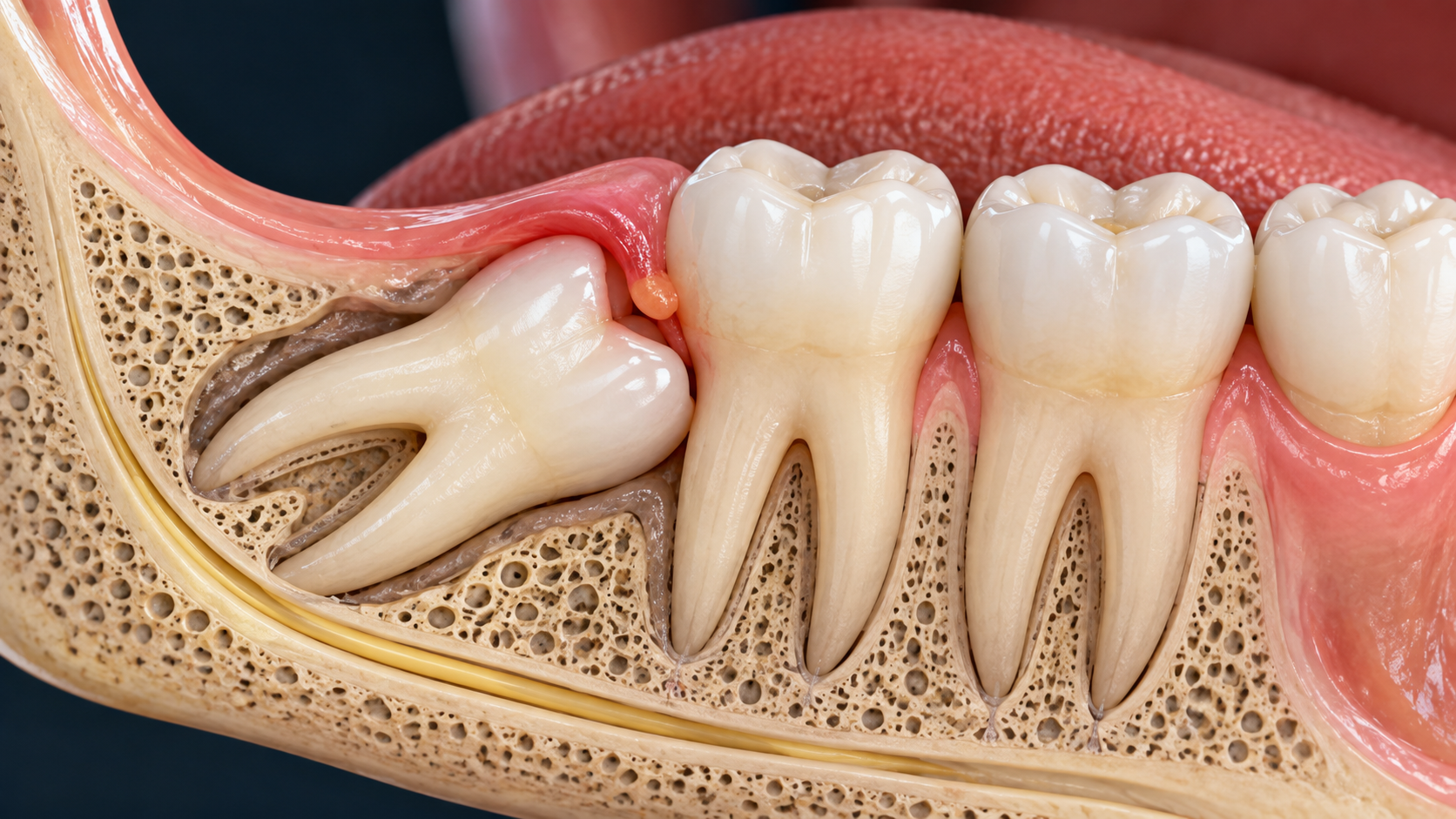

Wisdom tooth extraction and wisdom tooth surgery are not quite the same procedure. A fully erupted, accessible tooth may be removed with a simple extraction, while an impacted or difficult-to-access tooth may require surgery.
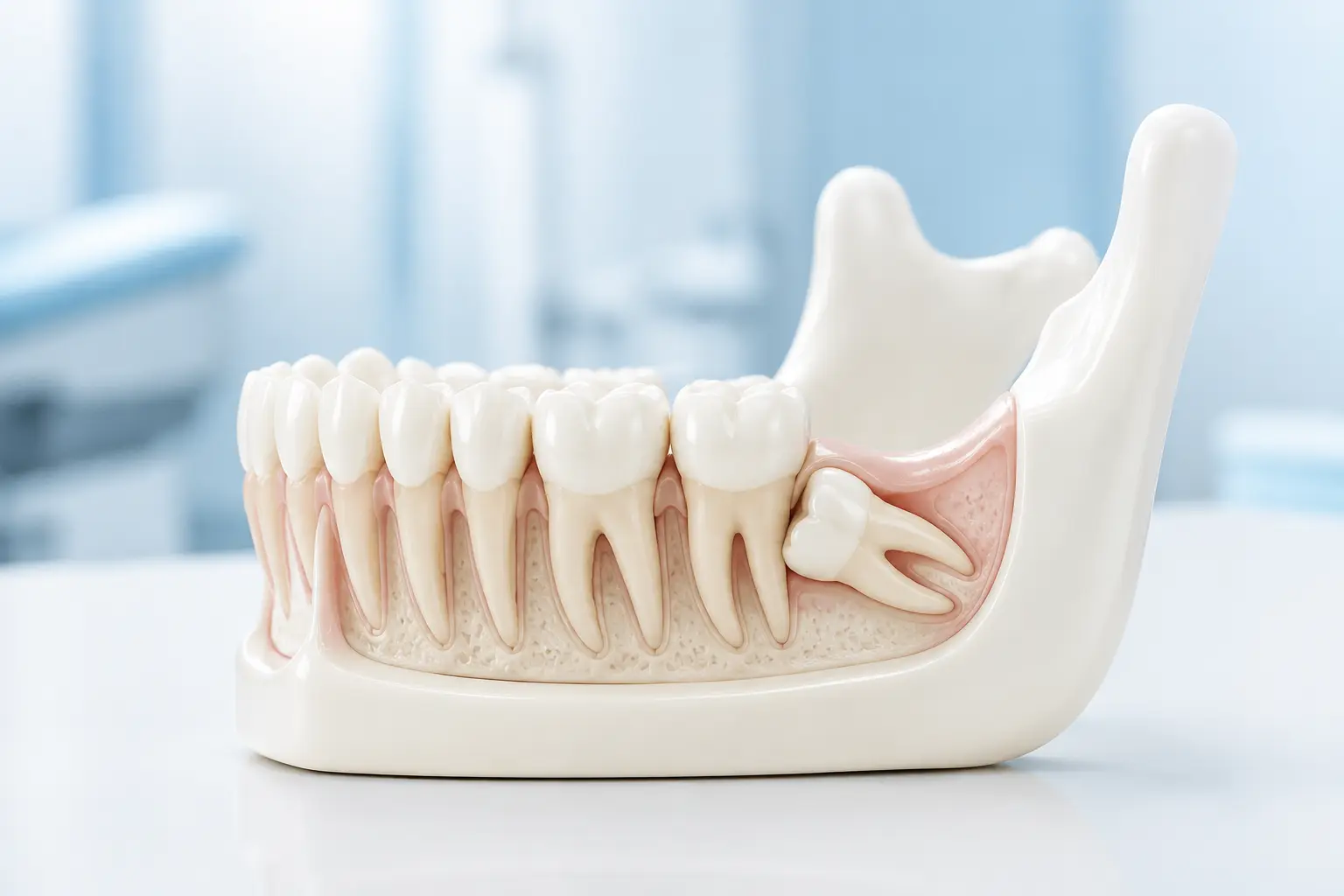
The appropriate approach depends on the tooth’s position, root anatomy and surrounding structures. Examination and dental imaging help determine which option is suitable.
What is a wisdom tooth extraction?
A routine or simple extraction generally means the dentist can access the tooth through the mouth and remove it without deliberately raising a gum flap or removing surrounding bone. After local anaesthetic has taken effect, instruments are used to loosen and remove the tooth.
Whether this is possible depends on factors such as how far the tooth has erupted, its shape and position, the condition of the crown, root anatomy and access at the back of the mouth.
What is wisdom tooth surgery?
Surgical removal is used when the tooth cannot predictably be removed by a straightforward extraction. This is common with impacted lower wisdom teeth, where part or all of the tooth remains beneath the gum or bone.
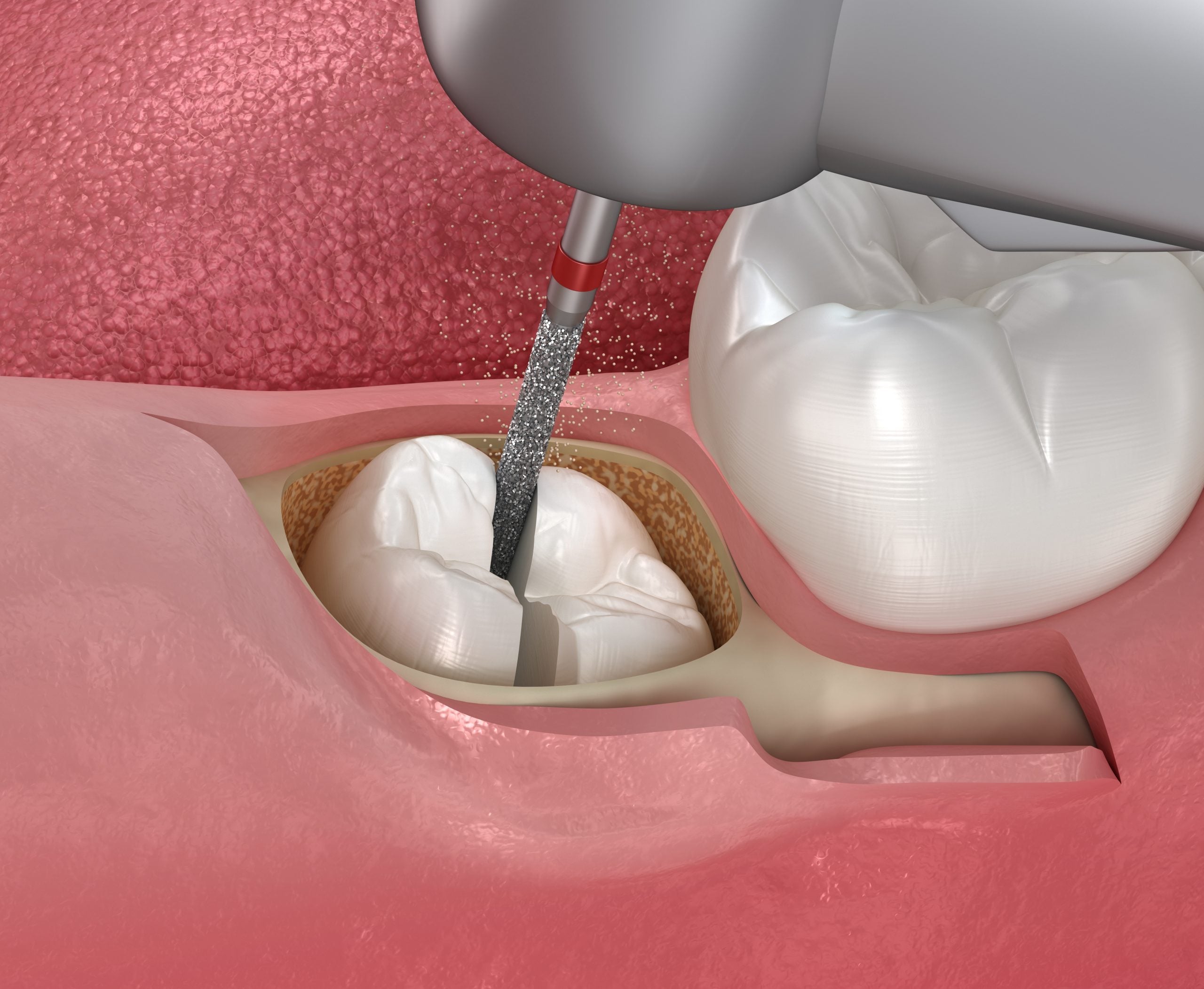
Depending on the individual case, surgery may involve making an incision in the gum, gently reflecting the gum tissue, removing a controlled amount of bone, dividing the tooth into smaller sections, removing those sections and placing stitches afterwards.
“Surgery” therefore does not necessarily mean a hospital operation or general anaesthesia. Many wisdom tooth surgeries are performed under local anaesthesia in an appropriate dental setting. Singapore’s Ministry of Health also lists impacted wisdom tooth surgery under more complex dental care.
| Feature | Simple extraction | Surgical removal |
|---|---|---|
| Typical tooth | Sufficiently erupted and accessible | Impacted, partially erupted or difficult to access |
| Gum incision | Usually not required | May be required |
| Bone removal / tooth sectioning | Usually not required | May be required |
| Recovery | Often less involved | May involve more swelling and jaw stiffness |
How is the approach decided?
The main factors are whether the tooth is erupted or impacted, its angle and depth, root anatomy, the amount of surrounding bone, disease affecting the tooth or neighbouring molar, and—for lower wisdom teeth—its relationship to nearby nerves.
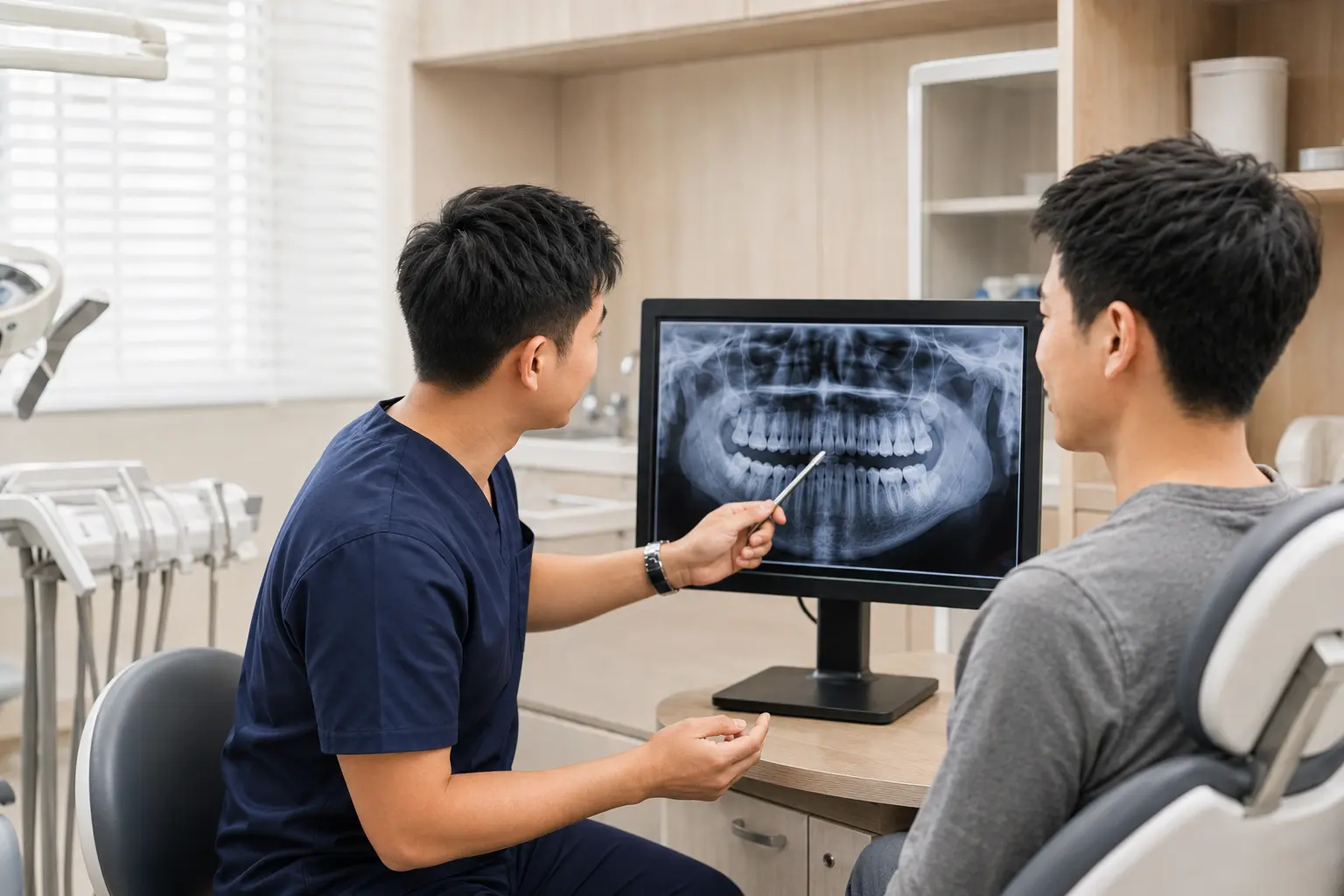
A panoramic X-ray is commonly used. Three-dimensional imaging may be considered when additional anatomical information is clinically useful.
Does an impacted wisdom tooth always need surgery?
No. An impacted tooth that is symptom-free and not causing disease may sometimes be monitored. Removal may be considered for recurrent infection, decay, gum disease, damage to the adjacent tooth, cystic change or another clinical indication.
Read more: When does wisdom tooth pain need treatment?
What about coronectomy?
For selected lower wisdom teeth whose roots appear closely related to the inferior alveolar nerve, coronectomy may be considered. The crown is removed while the roots are intentionally retained. It is not suitable for every tooth and requires individual assessment.
Is recovery different?
Recovery generally reflects how involved the procedure was. Surgical removal of a deeply impacted tooth may produce more swelling and jaw stiffness than a straightforward extraction, although individual recovery varies.
See our wisdom tooth surgery recovery guide.
Are the risks different?
Both procedures can involve bleeding, pain, swelling, infection and delayed healing. Surgical removal can carry additional case-specific risks such as dry socket, restricted mouth opening and altered sensation involving nearby nerves. Your dentist should discuss the risks relevant to your anatomy and treatment plan.
Cost and MediSave
Surgical removal may cost more than a simple extraction because the procedure can require additional time and surgical steps. MediSave may be used for eligible wisdom tooth surgical procedures, subject to the applicable rules and withdrawal limits.
For fees and common cost components, see our wisdom tooth extraction cost guide.
When might referral be appropriate?
Referral may be appropriate when the tooth position, anatomy, medical considerations or proximity to important structures makes the case more complex. The appropriate setting is determined individually.
The key difference
A wisdom tooth extraction generally refers to removal of a tooth that can be accessed relatively directly. Wisdom tooth surgery involves additional surgical access when the tooth is impacted or cannot be predictably removed with a simple extraction.
The terminology is less important than the treatment plan. A clinical examination and appropriate imaging allow the dentist to explain why removal is—or is not—recommended, which technique is suitable, the important risks and alternatives, and what recovery is likely to involve.
If you would like an assessment, you can contact Dr Mike Teoh Dental Clinic in Serangoon.
This article provides general information and does not replace a dental examination or personalised clinical advice.