
Computer-Guided Dental Implants in Singapore
Dental implants can replace missing teeth with a fixed restoration designed to restore function and appearance. At our Singapore dental clinic, implant treatment can be digitally planned using 3D CBCT imaging, intraoral scanning and customised surgical guides where clinically appropriate.
What Is a Dental Implant?
A dental implant is a titanium fixture placed into the jawbone to replace the root of a missing tooth. After the implant has integrated with the surrounding bone, it can support a dental crown to replace the missing tooth and restore function and appearance.

Why Use Computer-Guided Implant Surgery?
Dental implant placement requires careful planning of the implant's position, angle and depth in relation to the available bone, adjacent teeth, nerves, sinuses and the intended final restoration. Computer-guided implant surgery combines 3D imaging with digital planning to determine the intended implant position before surgery. A customised surgical guide can then be used to help transfer this planned position to the mouth during implant placement. Guided surgery does not eliminate surgical risks and is not required for every implant case. Your dentist will determine the appropriate approach based on your individual anatomy and treatment needs.

Our Digital Dental Implant Planning Workflow
Where clinically appropriate, dental implant treatment at our Singapore clinic can incorporate 3D CBCT imaging, intraoral scanning, digital implant planning and customised surgical guides.
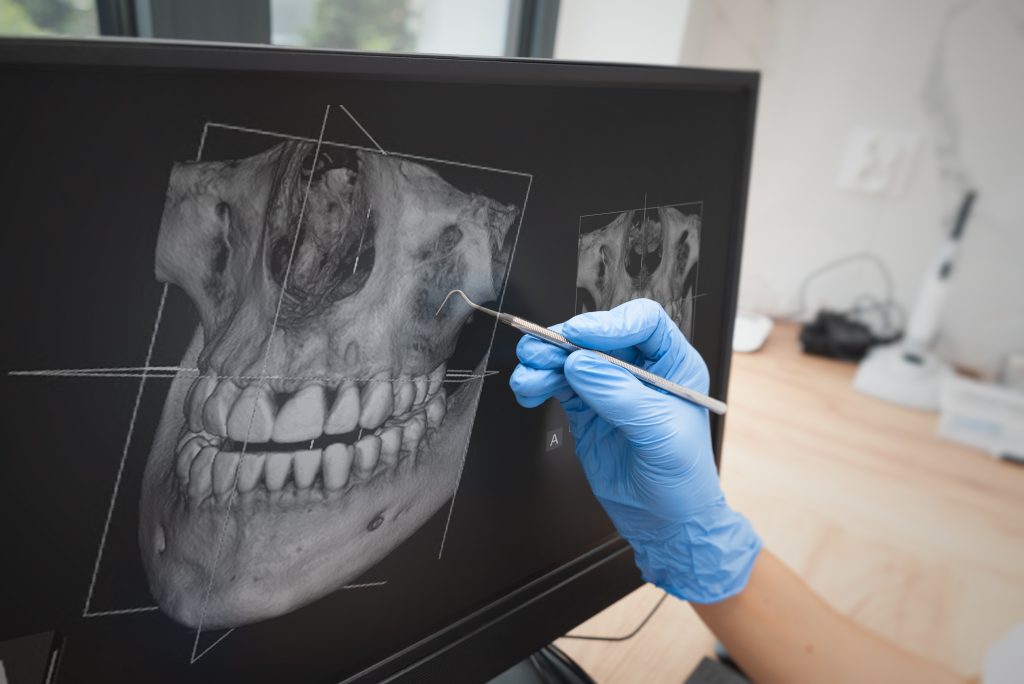
- 1 — 3D CBCT Imaging
A 3D CBCT scan provides detailed information about the jawbone and nearby anatomical structures. This information is used during digital implant planning to determine the planned implant position, angle and depth.
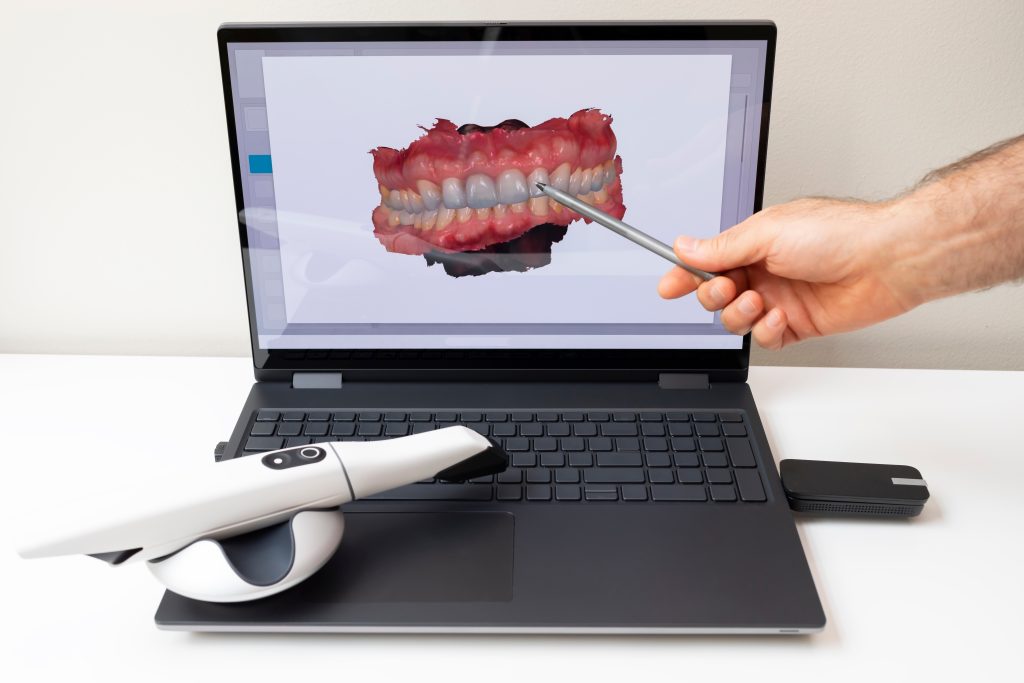
- 2 — 3D Intraoral Scanning
A digital intraoral scanner creates a 3D representation of the teeth and gums. This scan can be combined with the CBCT data to plan the implant in relation to the surrounding teeth and intended final restoration.
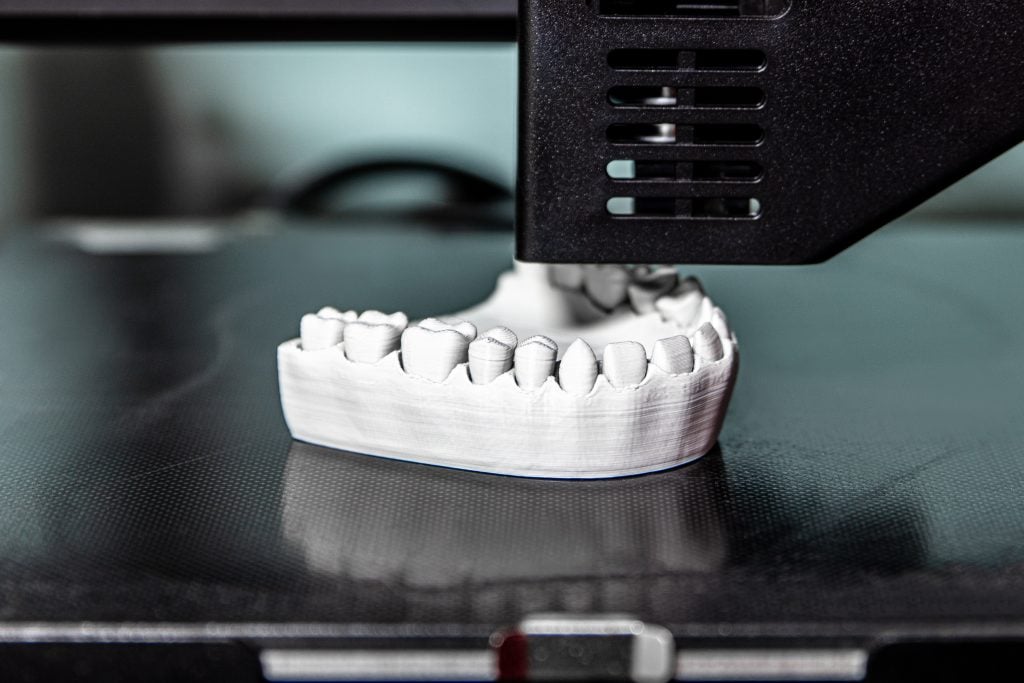
- 3 — Digital Planning & 3D-Printed Surgical Guide
The digital implant plan is used to design a customised surgical guide, which can be 3D printed in-house. During surgery, the guide helps transfer the planned implant position, angle and depth to the mouth.
Who May Be Suitable for Dental Implants?
Dental implants may be considered for adults who have one or more missing teeth, or teeth that cannot predictably be restored, and who have suitable oral and general health for implant treatment. Adequate bone is needed to support an implant, although bone grafting may sometimes be considered where bone volume is insufficient. Gum health, smoking, medical conditions, medications, oral hygiene and the condition of the surrounding teeth are also considered when assessing suitability.
What Happens During Dental Implant Treatment?
Treatment begins with an examination and assessment of the missing tooth area, surrounding teeth, gums and available bone. Dental X-rays and, where indicated, a CBCT scan may be used for planning. The implant is then placed into the jawbone under local anaesthesia. After a period of healing and osseointegration, the implant can be restored with an abutment and dental crown. The sequence may vary depending on whether extraction, bone grafting or temporary restoration is required.
Do I Need Bone Grafting?
Not every dental implant requires bone grafting. A graft may be considered when there is insufficient bone volume to support an implant in the planned position. This can sometimes be performed at the same appointment as implant placement, while other cases may require grafting first and a separate healing period. The need for grafting is determined after clinical and radiographic assessment.
How Long Does Dental Implant Treatment Take?
The overall treatment time varies with the condition of the site and the procedures required. Implant placement itself is usually completed in a single appointment, but the implant generally requires a healing period before the final crown is fitted. Cases involving tooth extraction, bone grafting or other additional procedures may take longer. Your dentist can provide a more specific timeline after assessment.
What Are the Risks of Dental Implant Treatment?
Dental implant treatment has potential risks and complications. These can include pain, swelling, bruising, bleeding, infection, delayed healing, implant failure or loss, and damage to nearby teeth or anatomical structures. Depending on the implant site, nearby nerves or the maxillary sinus may also be relevant. Guided surgery can assist in transferring a digital plan but does not eliminate surgical risks. The risks relevant to your case should be discussed before treatment.
What Is Recovery Like After Dental Implant Surgery?
Some discomfort, swelling and bruising can occur after implant surgery and generally improve as healing progresses. The extent of recovery depends on the number and location of implants and whether additional procedures such as extraction or bone grafting were performed. Post-operative instructions will be provided for oral hygiene, diet, medication where appropriate, and follow-up care.
How Long Do Dental Implants Last?
Dental implants are intended as a long-term tooth replacement, but no implant can be guaranteed to last for a specific period. Longevity depends on factors including oral hygiene, gum and bone health, smoking, medical conditions, bite forces and regular dental maintenance. The implant crown may also require repair or replacement over time due to wear or other complications.
Dental Implant Cost in Singapore
The cost of dental implant treatment in Singapore varies according to the individual treatment plan. Factors can include the implant and crown, diagnostic imaging, the condition of the site, and whether procedures such as tooth extraction or bone grafting are required. An itemised estimate can be provided after examination and treatment planning so you can understand the expected fees before proceeding.
For a detailed breakdown, read our dental implant cost guide in Singapore.
Can Medisave Be Used for Dental Implants?
Medisave may be claimable for eligible surgical components of dental implant treatment, subject to prevailing CPF rules, withdrawal limits and the procedure performed. It generally does not cover every component of implant treatment. After assessment, our clinic can advise which parts of the proposed treatment may be eligible and provide an estimate of the applicable Medisave claim.
Frequently Asked Questions About Dental Implants
Is dental implant surgery painful?
Local anaesthesia is used to numb the treatment area during dental implant placement. You may feel pressure or vibration during the procedure, but the area should be numb. Some discomfort, swelling or bruising can occur afterwards and usually improves as healing progresses. Medication may be recommended where appropriate.
How long does a dental implant procedure take?
The time required depends on the number of implants being placed and the complexity of the site. A straightforward single dental implant is usually placed during one appointment. Additional procedures such as tooth extraction or bone grafting may increase the treatment time.
How long does it take to heal after dental implant surgery?
Initial gum healing usually occurs over the first few weeks, while the implant itself requires a longer period to integrate with the surrounding jawbone. This process, known as osseointegration, commonly takes several months. The exact timeline varies depending on the implant site, bone quality and whether additional procedures were performed.
Do I need a bone graft before an implant?
Not everyone requires bone grafting. A bone graft may be considered when there is insufficient bone volume to support an implant in the planned position. In some cases, grafting can be performed at the same time as implant placement, while other cases may require a separate healing period before the implant is placed.
Can a dental implant fail?
Yes. Although dental implants are commonly used to replace missing teeth, successful integration cannot be guaranteed. An implant may fail to integrate with the bone or may develop complications later. Factors such as smoking, gum disease, medical conditions, oral hygiene, bite forces and bone quality can influence the risk of implant failure.
How long do dental implants last?
Dental implants are intended as a long-term tooth replacement, but no implant can be guaranteed to last for a specific number of years. Their longevity depends on factors such as oral hygiene, gum and bone health, smoking, medical conditions, bite forces and regular dental maintenance. The implant crown may also require repair or replacement over time.
What is computer-guided implant surgery?
Computer-guided implant surgery uses digital planning to determine the intended implant position before surgery. Information from 3D CBCT imaging and intraoral scanning can be combined to plan the implant position, angle and depth. A customised surgical guide may then be used to help transfer this planned position to the mouth during implant placement. Guided surgery does not eliminate surgical risks and is not required for every case.
Can Medisave be used for dental implant surgery?
Medisave may be claimable for eligible surgical components of dental implant treatment, subject to prevailing CPF rules, withdrawal limits and the procedure performed. It generally does not cover every component of implant treatment. After assessment, the clinic can advise which parts of the proposed treatment may be eligible and provide an estimate of the applicable Medisave claim.
Considering a Dental Implant?
If you are missing a tooth or have been told that a tooth may need to be replaced, we can assess the area and discuss whether dental implant treatment may be suitable for you.