


Choosing a dentist is a personal decision. The appropriate choice may depend on the type of care you need, how clearly treatment is explained, practical considerations such as location and fees, and whether you feel comfortable asking questions.
There is no single dentist who is necessarily the right choice for every patient. Instead of relying on broad claims or rankings, it can be more useful to assess whether a dentist and clinic are suitable for your particular needs. This guide outlines practical questions patients in Singapore can consider.
1. Check That the Dentist Is Registered in Singapore
All dental practitioners practising in Singapore must be registered with the Singapore Dental Council (SDC) and hold a valid Practising Certificate. The SDC website provides a public search function for registered dentists and oral health therapists.
Registration confirms that the practitioner is permitted to practise in Singapore. It should not be treated as a ranking system, but it is a sensible first verification step. If a practitioner describes themselves as a dental specialist, you can also check whether the relevant specialist registration is listed.
2. Consider the Type of Dental Care You Need
Some patients are looking for routine examinations, scaling, fillings or preventive care. Others may need assessment for wisdom teeth, dental implants, root canal treatment, orthodontics, gum disease or complex restorative work.
When arranging an appointment, you can ask whether the dentist provides the type of assessment or treatment you require. For a more complex problem, useful questions include:
- Does the dentist routinely assess this type of condition?
- What examinations or imaging might be relevant?
- In what circumstances would referral to another dentist or dental specialist be considered?
- Who will provide follow-up care if treatment is performed?
A dentist should not be expected to provide every form of treatment. An appropriate referral can be part of responsible care when a case falls outside the practitioner’s scope or when specialist assessment may be useful.
3. Look for Clear Communication
A consultation should give you an opportunity to describe your concerns and ask questions. The dentist should explain the findings in understandable terms and distinguish between what is observed, what is suspected and what may require further investigation.
Before agreeing to treatment, you may wish to understand:
- The working diagnosis and the reason for the recommended treatment
- Reasonable alternatives, including monitoring or no immediate treatment where appropriate
- The material risks and limitations relevant to your situation
- The expected treatment stages and likely follow-up
- What could happen if treatment is deferred
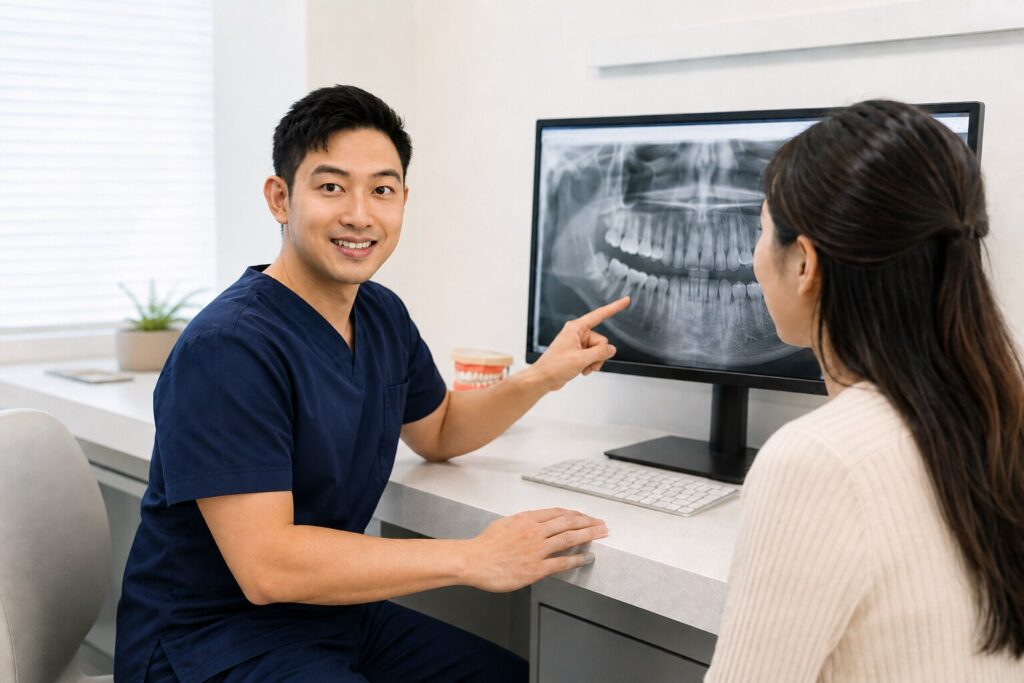
If an explanation is unclear, it is reasonable to ask the dentist to repeat it, show you the relevant tooth or X-ray, or provide written information where available.
4. Ask How the Treatment Plan Was Reached
Dental treatment planning usually begins with a history and clinical examination. Depending on the concern, photographs, dental X-rays, scans, study models or other records may be considered. Not every patient requires every investigation.
Technology can assist with diagnosis and planning, but the presence of a particular device does not by itself determine whether a clinic is suitable for you. A more useful question is how the information from an examination or investigation will affect the proposed treatment.
For example, a patient considering wisdom tooth removal may need the tooth’s position and relationship to nearby structures assessed. A patient considering dental implant treatment may require evaluation of the available bone, surrounding teeth and restorative requirements. The appropriate records depend on the individual case.
5. Understand the Estimated Fees
Fees can vary according to the diagnosis, complexity, materials used, number of visits and whether additional procedures are required. Before treatment, ask for an estimate that is sufficiently detailed for you to understand what is included.
Depending on the procedure, you may wish to clarify:
- Whether consultation, imaging, laboratory and review fees are separate
- Whether the estimate could change if the clinical findings change
- Which parts of treatment may qualify for MediSave, CHAS or insurance, where applicable
- Whether maintenance or replacement costs may arise later
An estimate is not always a fixed quotation because treatment needs can sometimes change. However, you should be able to ask why a fee has changed and what additional care is being proposed.
6. Consider Continuity and Follow-Up Care
Dental treatment does not always end when a procedure is completed. Reviews, preventive care, maintenance and management of unexpected symptoms may be relevant. Consider whether you understand who will provide follow-up and how to contact the clinic if you have concerns after treatment.
Continuity may be particularly helpful for care that occurs over multiple visits. At the same time, patients remain free to seek another opinion or transfer care. If you do so, copies of relevant records or imaging may assist the next practitioner, subject to the applicable administrative process.
7. Think About Practical Suitability
A clinic may be clinically appropriate but impractical if appointments are difficult to attend. Location, opening hours, accessibility, appointment availability and communication channels can influence whether you can maintain regular care.
For ongoing preventive dentistry, a conveniently located clinic may make reviews easier to attend. For treatment requiring several visits, it may also be worth asking about the anticipated schedule before starting.
8. Be Cautious With Guarantees and Pressure
Individual responses to dental treatment vary. Be cautious when information appears to guarantee a particular result, presents one option as suitable for everyone, or creates pressure to decide immediately without a clinical reason.
You should generally have enough information to make a considered decision. For elective or complex care, it is reasonable to take time to consider the options or obtain another opinion. Urgent conditions may require a different timeframe, which the dentist should explain.
Questions to Ask at a First Dental Appointment
- What have you found during the examination?
- Do I need any further tests or X-rays, and how would they affect the plan?
- What treatment options are reasonable in my case?
- What are the relevant risks, limitations and alternatives?
- What is the estimated fee and what does it include?
- How many visits might be required?
- What follow-up or maintenance may be needed?
- When would referral or another opinion be appropriate?
Frequently Asked Questions
How do I check whether a dentist is registered in Singapore?
Use the public search function on the Singapore Dental Council website. Dental practitioners practising in Singapore must be registered with the SDC and hold a valid Practising Certificate.
Should I choose a dentist based only on online reviews?
Online reviews may reflect individual experiences, but they do not provide a complete clinical assessment and may not be representative. Registration, communication, the suitability of the proposed plan, fees and continuity of care are more directly relevant considerations.
Is a dental specialist always required for complex treatment?
Not necessarily. The appropriate practitioner depends on the condition, complexity and scope of the dentist providing care. You can ask when referral to a dental specialist would be considered in your case.
Is it acceptable to seek a second opinion?
Yes. A second opinion may help when you are uncertain about a diagnosis, considering complex or elective treatment, or would like another perspective before deciding.
Choosing a Dentist Who Is Suitable for You
Choosing a dentist in Singapore is less about finding a universal “best” provider and more about finding a practitioner who is appropriate for your needs. Verify registration, consider the type of care required, ask how the diagnosis and treatment plan were reached, understand the likely fees, and make sure you can ask questions comfortably.
If you would like factual information about the services available at Dr Mike Teoh Dental Clinic, you may review our website or contact the clinic. An individual recommendation can only be made after an appropriate dental assessment.
Official Resource
Singapore Dental Council — search for registered dentists and oral health therapists