


Wisdom tooth pain can have several causes. An examination helps determine whether the tooth should be monitored, treated or removed.
Pain at the back of the mouth is often blamed on a wisdom tooth. Sometimes this is correct—but discomfort in the area can also come from the neighbouring tooth, the surrounding gum, the jaw muscles or another dental problem.
A painful wisdom tooth does not automatically need to be removed. The appropriate treatment depends on why it hurts, how the tooth is positioned and whether it is causing disease that can be treated predictably without removal.
This article explains some common causes of wisdom tooth pain, when removal may be considered and when you should arrange a dental assessment promptly.
Why can a wisdom tooth become painful?
Wisdom teeth, also known as third molars, are the last permanent teeth at the back of the mouth. Some erupt fully and remain functional. Others remain partly or completely beneath the gum because there is insufficient space or because they are angled against the neighbouring tooth.
Pain can arise from several different problems.
Inflamed or infected gum around a partly erupted tooth
When a wisdom tooth is only partly visible, a flap of gum may remain over part of it. Food debris and bacteria can collect beneath this flap, where routine brushing may be difficult.
The resulting inflammation is called pericoronitis. Symptoms can include:
- soreness or swelling behind the last molar;
- pain when biting or swallowing;
- an unpleasant taste or smell;
- difficulty opening the mouth; and
- swelling of the gum, cheek or nearby lymph nodes.
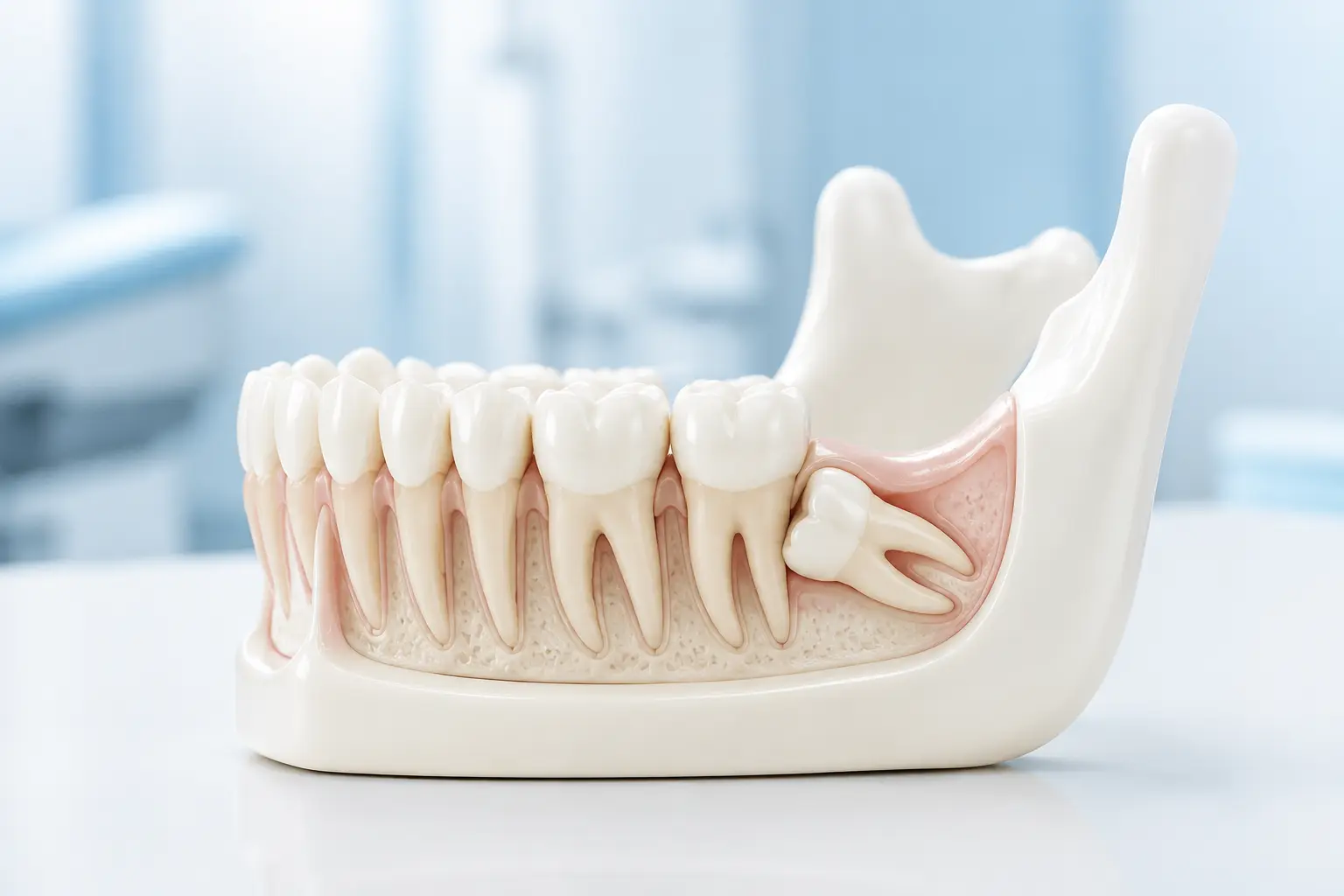
The position of a wisdom tooth can make the area difficult to clean and assess without appropriate imaging.
A mild episode may settle after the area is cleaned and the inflammation is managed. If the problem repeatedly returns because the tooth cannot erupt into a maintainable position, removal may be considered.
Food trapping
A partly erupted or angled wisdom tooth can create a difficult-to-clean space between itself and the tooth in front. Repeated food trapping may cause gum discomfort, bad taste, decay or loss of supporting bone around either tooth.
Tooth decay
Wisdom teeth sit far back in the mouth and can be difficult to brush. Decay may develop in the wisdom tooth itself or on the back surface of the adjacent second molar.
Whether the affected tooth can be restored depends on the depth and location of the decay, access for treatment and whether the area can be kept clean afterwards.
Gum disease
Plaque accumulation around a partly erupted or poorly positioned wisdom tooth can contribute to inflammation and loss of supporting bone. This may affect the wisdom tooth, the neighbouring molar or both.
Pressure from eruption
Some people experience temporary tenderness while a wisdom tooth is erupting through the gum. However, persistent or recurring pain should not simply be assumed to be normal eruption. An examination may be needed to rule out infection, decay or another cause.
Less common causes
Less commonly, disease such as a cyst may develop around an unerupted wisdom tooth. These changes may cause few symptoms initially and are usually identified through examination and appropriate dental imaging.
Does every painful wisdom tooth need to be removed?
No. Treatment should be based on the cause of the symptoms rather than pain alone.
A wisdom tooth may sometimes be retained when it is:
- erupting into a functional and maintainable position;
- free from significant decay or gum disease;
- not damaging the neighbouring tooth; and
- associated with a problem that can be managed conservatively.
For example, a first mild episode of gum inflammation may sometimes be managed by cleaning the area and improving access for daily oral hygiene. The dentist will also consider whether the tooth appears likely to erupt further.
Medication may help control symptoms in selected circumstances, but it does not correct food trapping, impaction, decay or an unmaintainable tooth position. Antibiotics are not automatically required for every episode of wisdom tooth pain and should be prescribed only when clinically indicated.
When might wisdom tooth removal be considered?
Following an examination, removal may be discussed when a wisdom tooth is associated with problems such as:
- repeated episodes of pericoronitis;
- decay that cannot be restored predictably;
- damage or decay affecting the neighbouring molar;
- persistent food trapping that cannot be kept clean;
- gum disease or loss of supporting bone;
- an abscess or spreading infection;
- a cyst or another pathological change; or
- pain that has been assessed and attributed to the wisdom tooth.
The presence of an impacted tooth on an X-ray does not by itself mean that surgery is necessary. A symptom-free tooth without evidence of disease may sometimes be monitored during routine dental reviews.
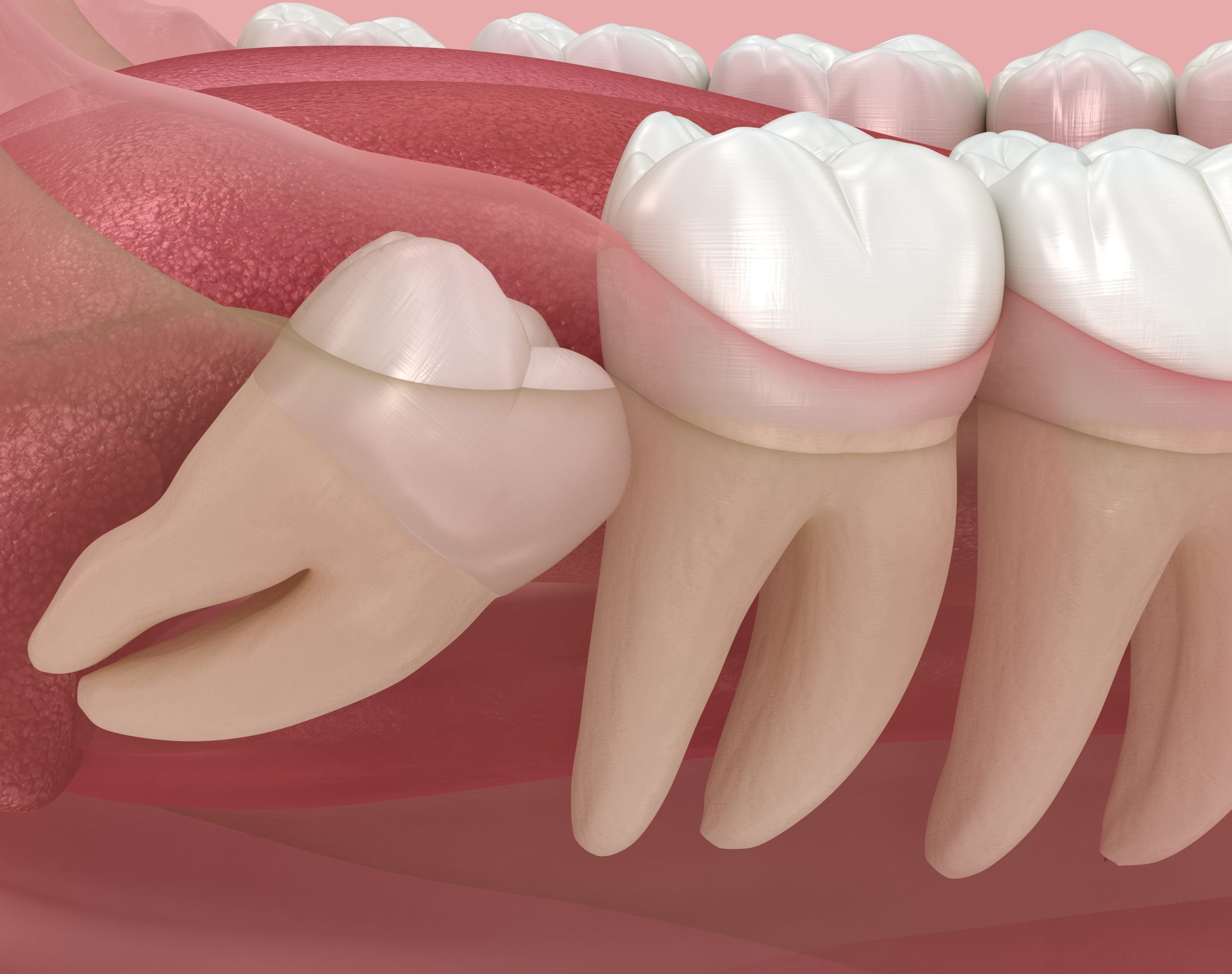
Wisdom teeth can erupt normally, emerge only partly or remain impacted at an angle. Position is only one part of the clinical assessment.
What happens during the dental assessment?
The dentist will ask about the location, duration and pattern of the pain. The tooth and surrounding gum will be examined for inflammation, discharge, decay, food trapping and tenderness. The adjacent molar and other possible sources of pain should also be assessed.
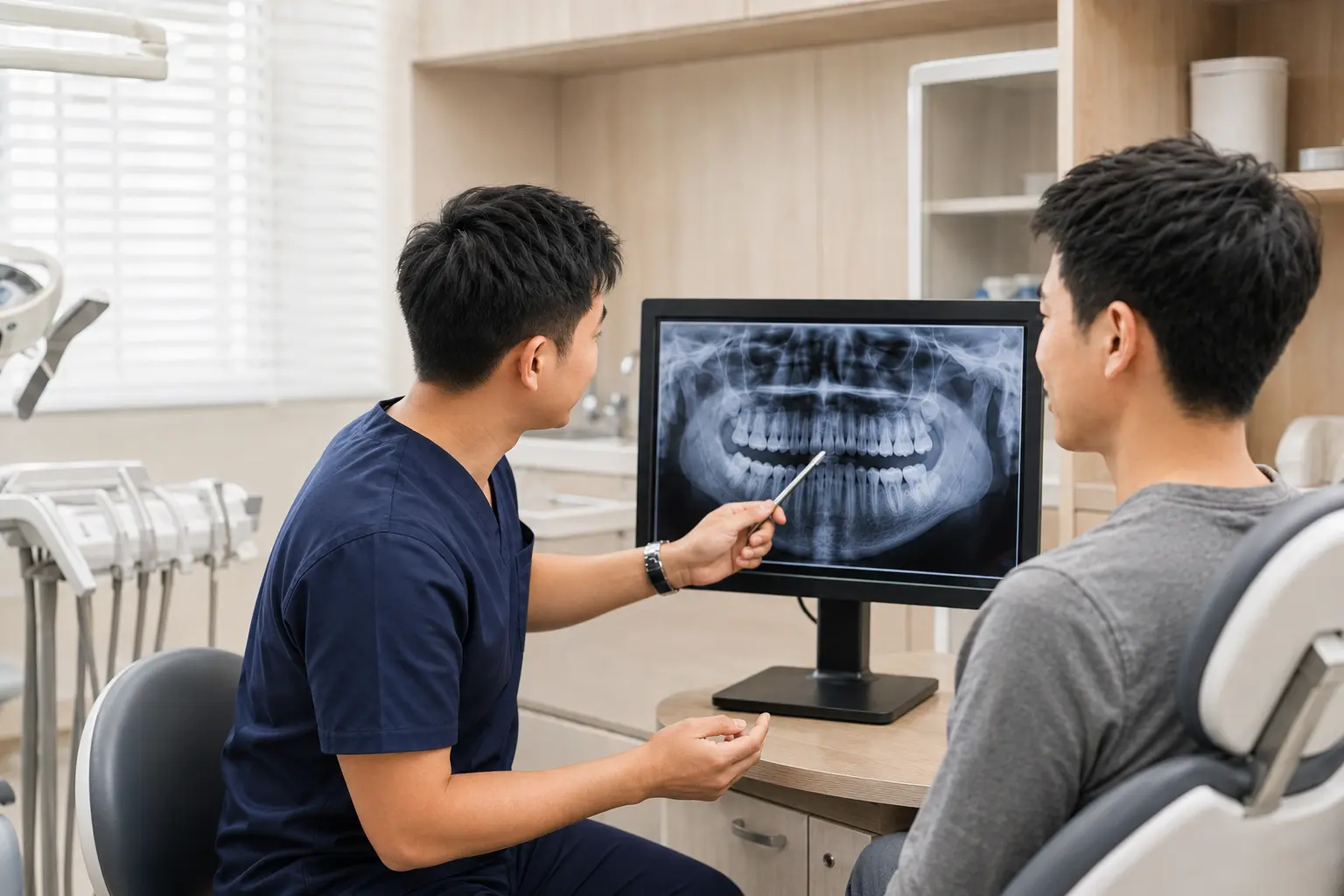
A dental X-ray may be recommended to evaluate:
- the angle and depth of the wisdom tooth;
- whether it is pressing against or damaging the neighbouring tooth;
- the shape and number of its roots;
- the surrounding bone; and
- the relationship of a lower wisdom tooth to nearby sensory nerves.
Not every patient requires three-dimensional imaging. A CBCT scan may be considered when additional anatomical information could materially affect treatment planning.
After assessment, the options may include monitoring, local cleaning, treatment of decay or gum disease, removal of the wisdom tooth, or referral where appropriate. The expected benefits, limitations and relevant risks should be discussed before a decision is made.
When should wisdom tooth pain be assessed urgently?
Arrange prompt dental attention if the pain is accompanied by:
- increasing facial or jaw swelling;
- fever or feeling systemically unwell;
- pus or a persistent unpleasant taste;
- worsening difficulty opening the mouth;
- difficulty swallowing; or
- symptoms that are rapidly becoming more severe.
Difficulty breathing, significant difficulty swallowing or rapidly spreading swelling requires urgent medical attention.
What can you do while waiting for an appointment?
Until you can be assessed, it may help to:
- brush the area gently with a small, soft toothbrush;
- rinse with warm salt water;
- avoid repeatedly poking beneath the gum with sharp objects; and
- use an appropriate over-the-counter pain reliever according to its label, provided it is safe for you.
People who are pregnant, have medication allergies, stomach ulcers, kidney or liver disease, take blood-thinning medication, or have other relevant medical conditions should seek advice before taking pain medication.
These measures may reduce discomfort temporarily but do not replace a dental assessment if symptoms persist or recur.
Can wisdom tooth pain disappear on its own?
It can. Inflammation may temporarily settle after trapped food is dislodged or the gum is cleaned. Pain related to eruption may also ease.
However, disappearance of pain does not necessarily mean that the underlying cause has resolved. If the area repeatedly becomes painful, traps food or swells, an examination can determine whether monitoring remains reasonable or whether treatment should be considered.
Frequently asked questions
How do I know whether the pain is coming from my wisdom tooth?
Pain from the back of the mouth can spread towards the ear, jaw or throat, but this pattern is not specific to wisdom teeth. Decay in a neighbouring molar, gum disease, jaw-muscle pain and other dental conditions can feel similar. Examination—and sometimes an X-ray—is needed to identify the source.
Can an infected wisdom tooth be treated without removal?
An acute episode may sometimes be managed initially with local cleaning and other treatment appropriate to its severity. Whether removal is subsequently advisable depends on the tooth’s position, the cause of the infection, whether the area can be kept clean and whether the problem has recurred.
Should a wisdom tooth be removed before it starts hurting?
Not every symptom-free wisdom tooth needs removal. The decision depends on clinical and radiographic findings, the likelihood of future disease, the risks of intervention and the feasibility of ongoing monitoring. A dentist can explain the considerations relevant to the individual tooth.
Is wisdom tooth removal always a surgical procedure?
No. A fully erupted tooth may sometimes be removed by a routine extraction. A partly erupted or impacted tooth may require a surgical approach involving access through the gum, removal of a limited amount of surrounding bone, division of the tooth, or a combination of these steps.
Can wisdom tooth pain cause headaches or ear pain?
Pain from the back of the jaw may sometimes be perceived in nearby areas. However, headaches and ear pain have many possible causes, so these symptoms should not automatically be attributed to a wisdom tooth.
The key point
Wisdom tooth pain is a symptom, not a diagnosis. Some painful wisdom teeth can be managed without removal, while others repeatedly become inflamed or cause decay, infection or damage to a neighbouring tooth.
A dental examination can establish the likely cause and determine whether monitoring, conservative treatment or removal is appropriate.
If you have pain or swelling around a wisdom tooth, you may arrange an assessment at Dr Mike Teoh Dental Clinic in Serangoon. Treatment recommendations are made after evaluating the tooth, the surrounding tissues and any relevant imaging.