Broken, decayed or worn teeth may be repaired in different ways depending on how much healthy tooth structure remains. At our Serangoon clinic, assessment may lead to treatment with a filling or crown, or referral for root canal treatment where appropriate.
Fillings
When a Filling May Be Suitable
A filling may be appropriate when a tooth has a cavity, small fracture, worn area or defective existing restoration. Symptoms can include sensitivity, food trapping or a rough edge, although some problems are found before they become painful.
How Fillings Repair Teeth
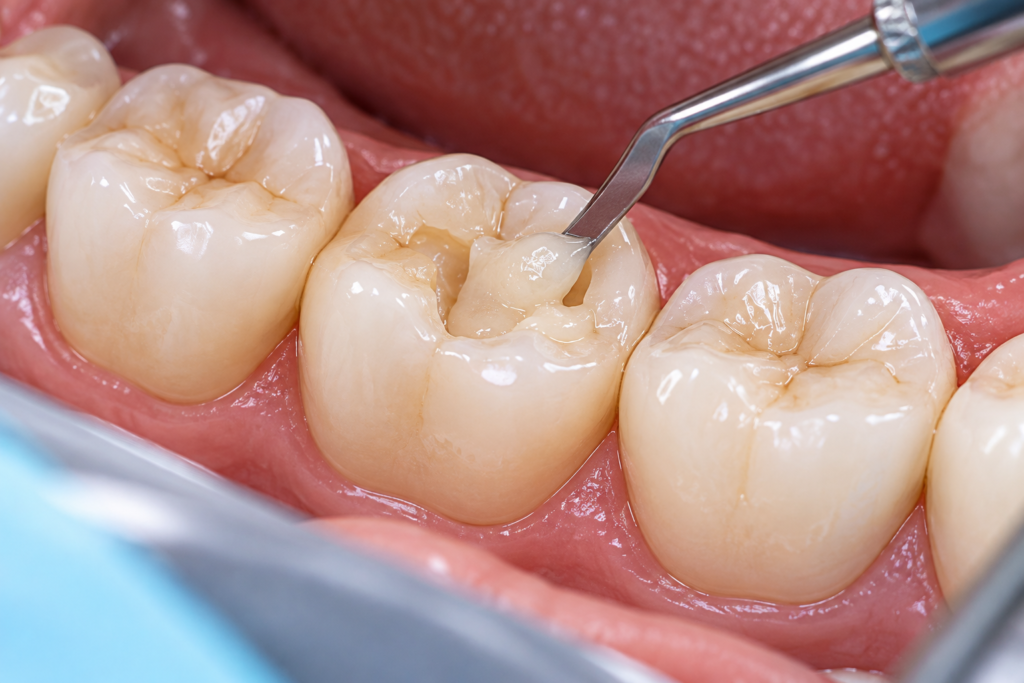
Damaged or decayed material is removed where required, and the remaining tooth is restored with a suitable filling material. The choice depends on the tooth, defect and biting forces.
A filling aims to restore the tooth’s shape and function while preserving healthy structure. Larger defects may need a different restoration. An examination and, where indicated, an X-ray help determine the appropriate option.
How much do fillings cost?
Simple fillings are listed at $87.20–$130.80 per tooth. Complex fillings start from $130.80 per tooth. The fee depends on the size and complexity of the restoration.
These are the fees listed on this website; your dentist confirms the final treatment plan and fee after examination. View the full treatment price list.
Dental Filling FAQs
What type of filling will be used?
Tooth-coloured composite is commonly used, but the appropriate material depends on the tooth, cavity size, moisture control and biting forces. The available options can be discussed after assessment.
How long does a dental filling last?
There is no fixed lifespan. Longevity depends on the filling size and position, remaining tooth structure, bite, grinding habits, diet and oral hygiene. Fillings should be reviewed during routine dental examinations.
A crown may be considered when a tooth has lost substantial structure, contains a very large filling, is cracked, or needs protection after selected root canal treatment. Not every damaged tooth requires a crown.
How a Crown Protects a Tooth
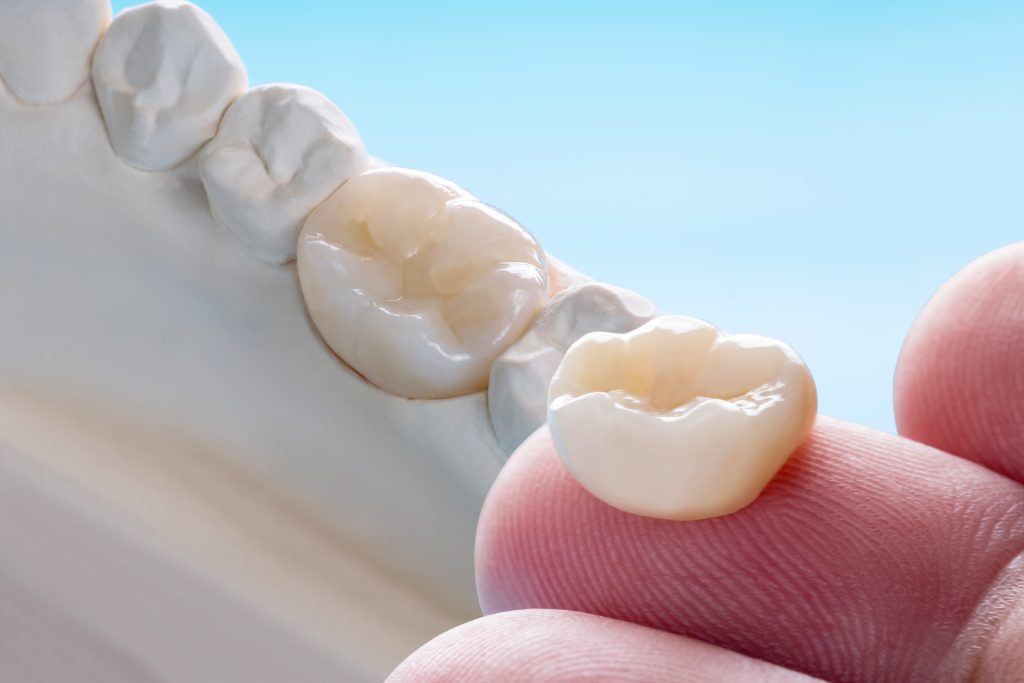
A crown covers the prepared tooth to restore its shape and help distribute biting forces. Material and design are selected according to the tooth position, remaining structure and clinical requirements.
Treatment usually involves preparing the tooth, recording its shape with a scan or impression, and fitting a custom restoration. Risks, alternatives and the expected maintenance of the tooth are discussed before treatment.
How much does a dental crown cost?
Resin crown: $654 onwards per unit.
Porcelain fused to metal crown: $926.50 onwards per unit.
Ceramic crown: $1199 onwards per unit.
These are the fees listed on this website; your dentist confirms the final treatment plan and fee after examination. View the full treatment price list.
Dental Crown FAQs
What happens during crown treatment?
The tooth is assessed and prepared to create space for the restoration. A digital scan or impression records its shape, and a temporary crown may be fitted while the final crown is made. The completed crown is then checked and cemented.
How long does a dental crown last?
Crown longevity varies. It is influenced by the condition of the supporting tooth, biting forces, grinding, diet, oral hygiene and maintenance. Both the crown and the underlying tooth require ongoing review.
Deep decay, cracks or trauma can inflame or infect the pulp inside a tooth. Possible symptoms include spontaneous pain, prolonged sensitivity, pain on biting or swelling, although diagnosis requires clinical tests and appropriate imaging.
Assessment and Referral
Root canal treatment may allow a suitable tooth to be retained. We assess the tooth first and arrange treatment or referral according to the tooth involved and the complexity of the case.
Root canal treatment is not appropriate for every tooth. The amount of remaining tooth structure, periodontal support, restorability and alternative options are considered before deciding whether the tooth should be treated, referred or removed.
Root Canal Treatment FAQs
What is root canal treatment?
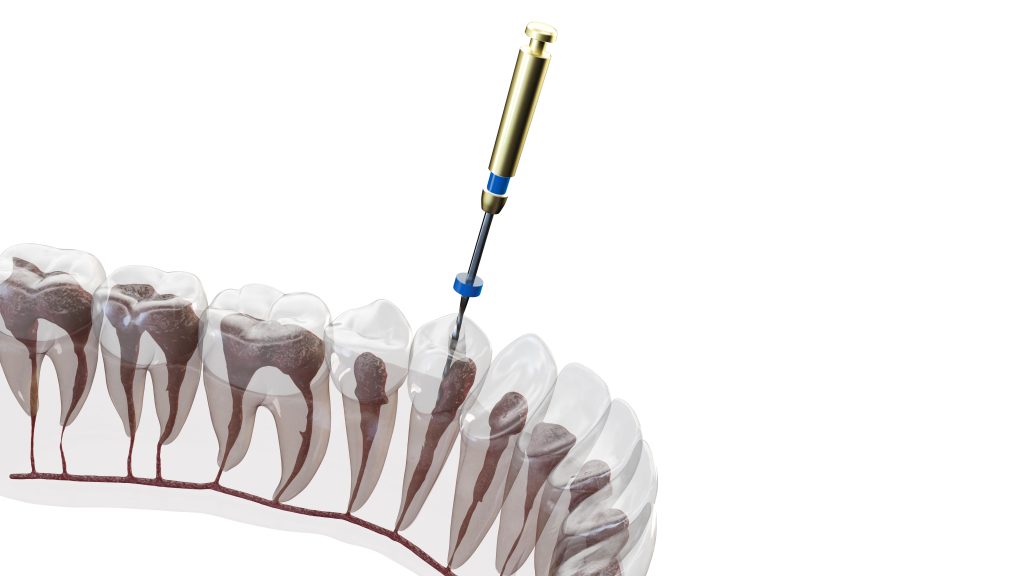
Root canal treatment removes inflamed or infected tissue from inside a tooth, cleans and shapes the canal system, and seals it. A suitable restoration is then required to protect and restore the tooth.
Do you provide all root canal treatments?
Cases differ in complexity. We assess the tooth and may provide selected treatment or refer you to a clinician with appropriate expertise, particularly when the tooth or canal anatomy is more complex.